
A war of words—combatting the spread of disinformation
Dr Mona Krewel is helping the New Zealand Defence Force combat the spread of disinformation and safeguard national security.
Disinformation is an insidious force in today’s digital world and is being wielded to manipulate narratives and influence public opinion.
In an effort to combat the spread of disinformation about its operations, the New Zealand Defence Force (NZDF) has turned to researchers at Te Herenga Waka—Victoria University of Wellington to assess the accuracy of online discourse and evaluate the potential impact of false or misleading narratives.
We live in an era of information warfare, says Dr Mona Krewel, a senior lecturer in Comparative Politics at the School of History, Philosophy, Political Science and International Relations.
Disinformation is everywhere. It has become a weapon that’s deliberately used to control narratives and manipulate people’s thinking. This has the effect of influencing public perception, decision-making, and even behaviour.
Dr Mona Krewel
Senior Lecturer in Comparative Politics
“Disinformation campaigns have evolved with the advent of social media and digital platforms, making it easier for malicious actors to disseminate false information rapidly and widely.”
A lot of Mona’s research is centred on the relationship between media and politics, with a particular focus on social media. “I run the New Zealand Social Media Study, which collects and analyses data on the way political parties and party leaders use social media. During election time, we publish weekly interim results from the election campaigns on how they are going on social media—we also fact-check their posts, and we call them out for fake news.”
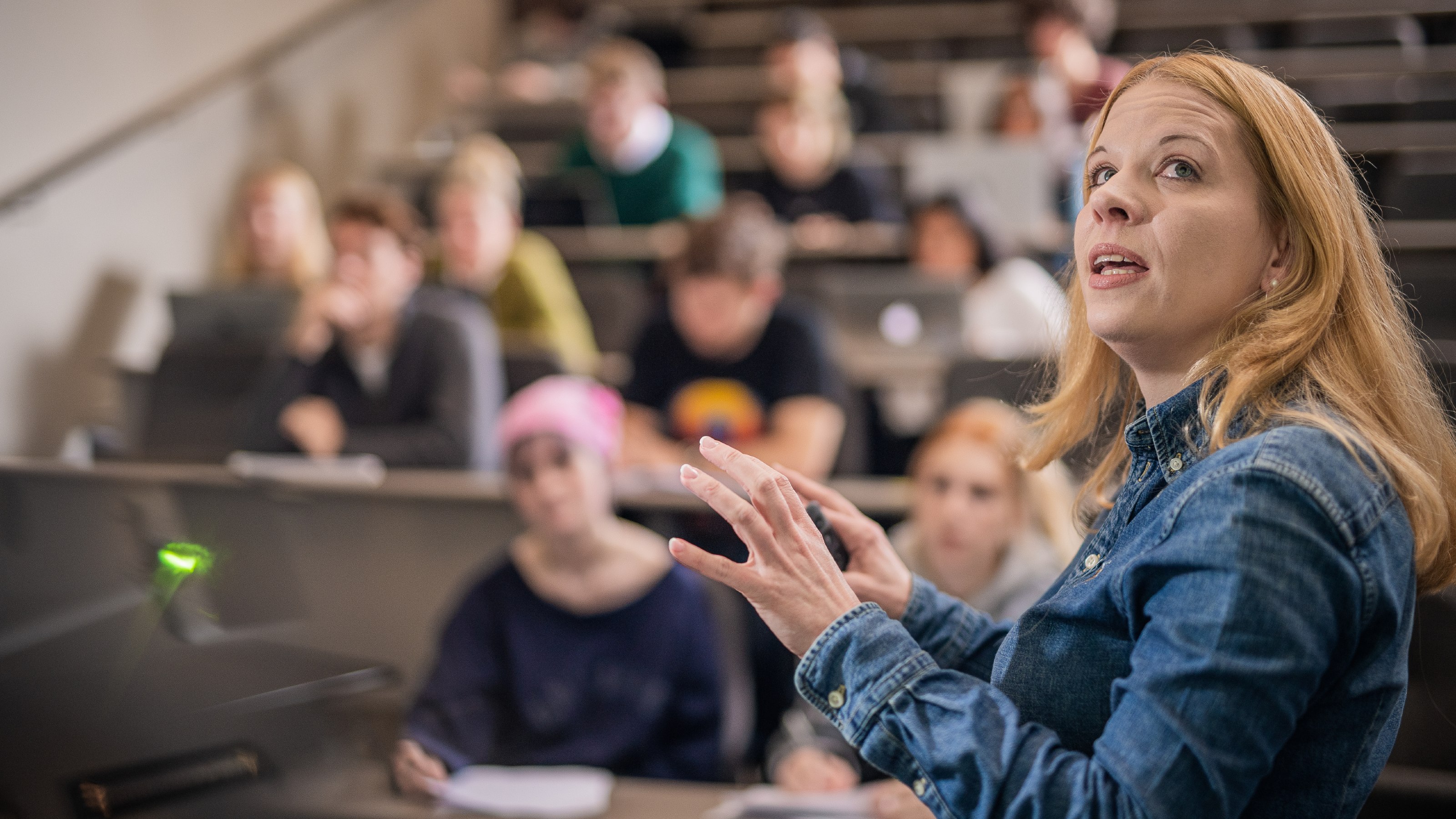
In that context, Mona founded the Internet Social Media and Politics Research Lab (ISPRL), which, in collaboration with the Policy Hub, is being contracted by a number of external organisations to deliver a range of research projects.
Previously, she has worked with the NZDF to look at New Zealand’s social media ecosystem, identifying demographic variables—who was using it and whether they were using it for political information.
Off the back of that project’s success, Mona and the ISPRL have been commissioned to work with the NZDF once more to uncover the prevalence of disinformation online about the Defence Force and its military operations.
“It is crucial for the NZDF to understand what narratives circulate about them,” she says. “But it’s about more than just protecting their reputation—it’s also about anticipating potential threats to national security.”
The NZDF is funding $95,000 for the project, which is examining the volume and type of disinformation spread about the NZDF, as well as the roles that bots and AI play in driving and amplifying this content.
“Disinformation poses a clear and significant threat to modern military operations,” says Mona. “Disinformation campaigns can erode the public's trust in the military, affect the morale of service members, and potentially influence the outcomes of military operations. The NZDF must be able to fully grasp these dynamics to safeguard its reputation and operational effectiveness.”
Given the strategic importance of the NZDF, the study is providing a comprehensive analysis of how disinformation is propagated and the specific role that automated agents (bots) play in this process, as well as the extent of the spread.
“The NZDF research unit regularly visits us on campus and the collaboration is structured around shared activities such as joint workshops, conference attendances, and co-authored publications. It’s very much a project with them, not just for them.”

Data is collected for the project through social media monitoring and web scraping—automated data extraction from websites.
“We’re looking at public posts on Facebook, Instagram and Reddit that contain harmful, false information about the NZDF and categorise the kind of content it is, such as hate speech or discrimination. We also analyse the argumentative strategies used—typically, this might be cherry-picking information or quoting pseudo-experts. We also examine the tone of these posts on a scale from extremely negative, neutral, to extremely positive.”
This analysis is all done manually, and the data is then used to inform AI and Machine Learning models to analyse the role of bots in spreading disinformation. This aspect of the research leverages off a previous project where the team developed an explainable AI approach to detect disinformation.
As a reference point, the project also requires the ground truth—the real facts about the NZDF and its operation—to be clearly identified. “Defining and validating sources of truth are critical for accurately distinguishing what’s disinformation and what is factual. We have assembled a team of experts from the NZDF to define these criteria, and we’re also cross-referencing existing material like press releases, approved social media posts, strategic plans, annual reports, policies, and official website copy. This has allowed us to build a body of text that the NZDF can validate as a source of truth.”
The project is very interdisciplinary in nature, explains Mona. “I’m a political scientist, as are two of the Research Assistants, but the postdoctoral student working on the project is a computer scientist. What we do is computational social science, combining expertise from political science and computer science to address real-world challenges.”
Mona says the study would be a good jumping-off point to conduct a survey to assess what impact disinformation about the NZDF is having on the public’s trust and perception. She also points out that disinformation isn’t confined to our national borders, either.
“There’s the potential to extend the scope of the research beyond Aotearoa to include the South-West Pacific region,” she explains “This would identify any regional patterns and variations in disinformation campaigns, as well as assess the impact of disinformation on the general public as well as the NZDF itself.”
Mona says it’s extremely important from a national security perspective for the NZDF to know what information is circulating and where it’s coming from.
They need to know how people out there talk about them and what false information is out there, because we are in a time of information warfare where disinformation is a weapon—it falls into the same category as bombs and bullets, as a type of modern warfare.
Dr Mona Krewel
Senior Lecturer in Comparative Politics
So the NZDF needs to be able to fully understand the full extent of the disinformation in order to to prevent people falling for it and to ensure the true stories can be told.”
She says the research methodologies can also be applied to other areas.
“Disinformation detection is important in general these days—I’m also working on a project about climate change disinformation interventions for young people. I will be talking about the findings to the Parliamentary Commission on Climate Change—they’re very interested because it will help them run counter campaigns and push out accurate information.
“These days we’re seeing crises around public health, environmental issues, or wars, so it is very important for governments to know if there's disinformation around out there that goes against the action they’re trying to get people to take,” she says. “It’s not about censoring the internet, but it is totally legitimate to engage academics like us to monitor the situation in a politically neutral way—they can then react with appropriate communication measures to ensure the right information gets out there and people are protected from whatever the threat might be.”
Mona says the project is demonstrating that social sciences not only deliver fundamental blue-skies research but can provide real-world applications by successfully collaborating with the public sector and engaging across disciplines.
“It’s a win-win situation—clients like the NZDF don’t have time to sit down and thoroughly research this, so they outsource it to us because we have the capacity and expertise to do it,” she says. “On the other hand, it’s beneficial for me because this is highly applicable research that has positive real-world outcomes. It’s so important as a researcher to have that impact.”
Find out more about research at Te Kura Aro Whakamuri, Rapunga Whakaaro, Matai Tōrangapū me te Ao—The School of History, Philosophy, Political Science and International Relations.